



TABLE OF CONTENTS
Key Takeaways
- We tested Claude Fable 5.2 using the Claude API with a GPU job-scheduling puzzle, a SQL agent task, chart reading and a speed test.
- Fable 5.2 was benchmarked against Fable 5.1, Opus 5.5, Sonnet 5.5 and Haiku 5.5.
- At xhigh effort, Fable 5.2 found the fastest schedule for 12 GPU jobs in all five runs; max effort cost about 80% more for no real gain.
- Opus, Sonnet and Haiku 5.5 also solved the scheduling and SQL tasks, and Haiku 5.5 did it at 1/26 to 1/80 of the cost.
- Fable 5.2 read all 48 points on a dense line chart, against 47 for Opus 5.5 and 5 for Fable 5.1.
- In standard mode, Opus 5.5 was faster than Fable 5.2 and cost half as much per answer.
- Fable 5.2 and Mythos 5.2 are one model at $8/$40 per million tokens. Mythos is limited to approved security and life-sciences organisations.
Anthropic has released Claude Fable 5.2 and Claude Mythos 5.2, one underlying model offered two ways. Fable 5.2 is available to every customer, with cyber and biology safeguards, and Mythos 5.2 is for organisations Anthropic approves for security or life-sciences work.
Launch benchmarks show which model scores highest, but do not make it clear which Claude model is worth paying for on your workload.
We gave Fable 5.2 small tasks with built-in traps (a GPU job schedule, a SQL query over a messy database and a dense line chart), ran the schedule five times at each effort level and measured accuracy, cost and speed. We tested Fable 5.2 on the Claude API against Fable 5.1, Opus 5.5, Sonnet 5.5 and Haiku 5.5.
Tests ran in November 2026. We have included Anthropic’s own scores, how to choose an effort level and where cheaper Claude models are enough. We also cover speed, fast mode and the code changes that break older integrations.
One Model, Two Ways In
Who can use which model
Prices fall from $10 and $50 on Fable 5.1, and Anthropic reports output up to 30% faster; its developer notes list the API changes.
Claude Fable 5.2 Benchmarks
In Anthropic’s scores, the largest gains over Fable 5.1 come in robotics, chart reading and knowledge work. The biggest jump is in simulated robotics, where RoboDojo Sim rises from 27.6% to 64.9%. Chart reading (Chartography) goes from 44.8% to 73.4%, and the Remote Labor Index from 17.9% to 41.3%. In the chart’s Coding and agents view, the biggest rise is Terminal-Bench-Science, from 52.6% to 74.6%. Fable 5.2 is also ahead of Opus 5.5 on all ten benchmarks shown:
Fable 5.2 vs Fable 5.1 vs Opus 5.5
Scores reported by Anthropic.
What Fable 5.2 and Mythos 5.2 Built
Anthropic’s launch videos show the range:
Fable 5.2 coordinated over 1,000 subagents for eight days to build an operating system that boots on a laptop.
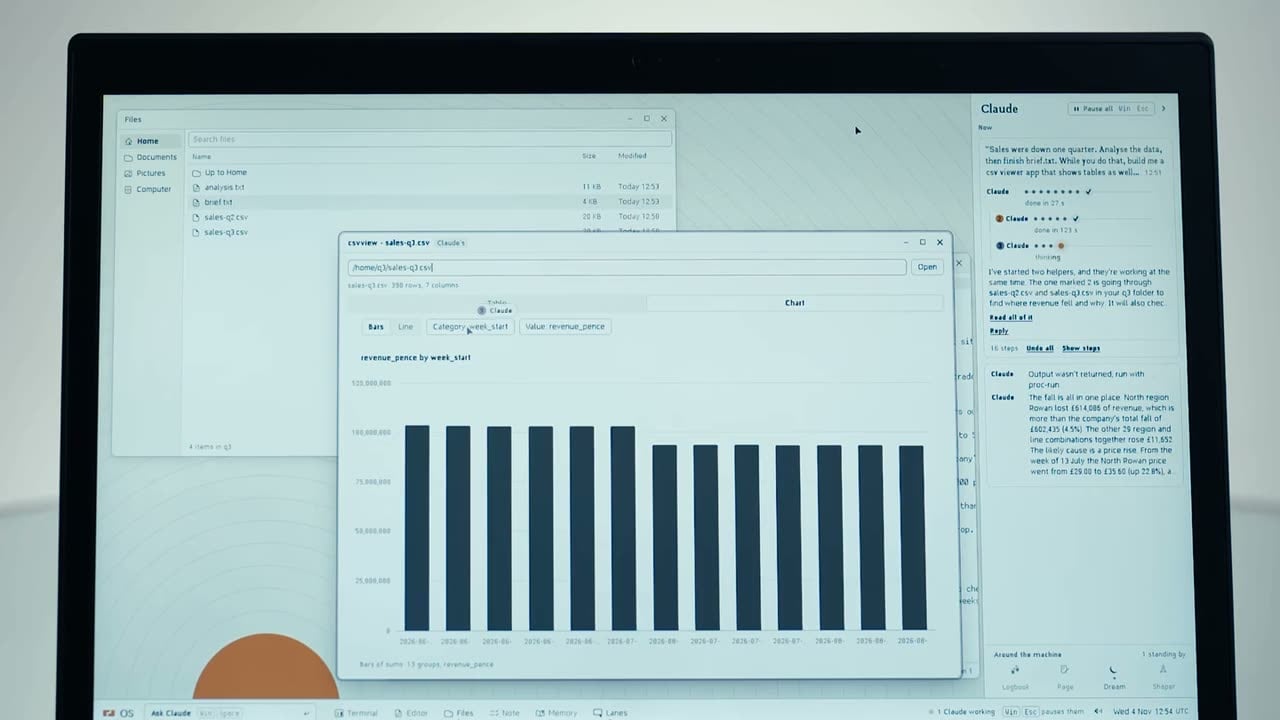
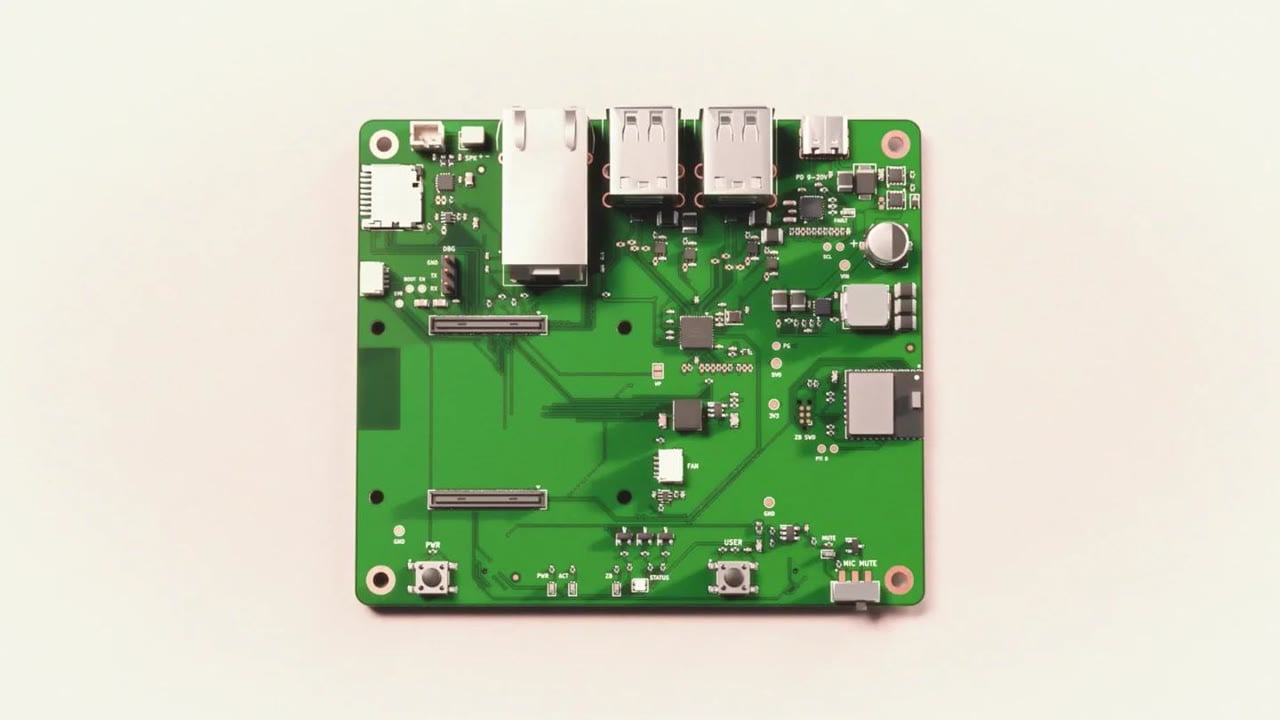


Videos: Anthropic.
Choosing an Effort Level
Thinking is always on, so effort (an API setting from low to max that controls how much the model reasons) sets depth, time and cost. To test it, we set a trap: 12 jobs to schedule on three GPU nodes, where job C needs all three nodes at once. Starting whatever is ready whenever nodes are free keeps job C waiting until hour 12, and the plan runs to hour 30. The best plan finishes at hour 21 by deliberately leaving nodes idle so job C can start at hour 2.
Two schedules for the same 12 jobs
Over five runs per effort level, xhigh and max found the 21-hour schedule every time, and every miss was 22 hours. Low and high found it in four runs out of five, but medium found it only once, so more effort did not always mean a better answer. With five runs per level, treat that dip as a warning rather than a rule.
Five runs per effort level
Runs that found the 21-hour schedule, out of five per level; the other views show the average cost and output tokens per run.
Cost rises with every level, from $0.068 a run at low to $0.176 at max, 81% more than xhigh for the same result. Xhigh is the cheapest level that never missed; low suits jobs where you can check the answer and retry.
Claude Fable 5.2 vs Cheaper Claude Models
On short, well-defined work, cheaper models kept pace: Opus 5.5, Sonnet 5.5 and Haiku 5.5 solved the trap in all three runs at high effort, and all five models found the exact revenue in a trap-laden SQL database. Haiku 5.5 did both at about 1/26 to 1/80 of Fable 5.2’s cost.
Same tasks, five Claude models
One SQL agent run per model; the other views show its time and the average cost of a scheduling run.
We also asked Fable 5.2, Fable 5.1 and Opus 5.5 to read every value from a dense line chart with 48 closely spaced points, in one run each. Fable 5.2 read all 48 exactly, against 47 for Opus 5.5 and 5 for Fable 5.1, though none of Fable 5.1’s readings was more than 3 GPU hours out.
Claude Fable 5.2 Speed and Fast Mode
On one prompt at low effort, Fable 5.2 averaged 78 output tokens per second against 57 for Fable 5.1, 36% faster, above Anthropic’s figure of up to 30%. Opus 5.5 generated tokens faster still, at 86 per second, and cost about half as much per answer: $0.026 against $0.052. Fast mode takes one parameter and reaches 220 tokens per second, finishing in about a third of the time (5.4 seconds against 16.5 in standard mode) for 1.8 times the cost per answer:
Three runs per setup
Claude Fable 5.2 API: Getting Started
The Models API shows which models a key can call:
Mythos 5.2 accepts the same requests with the model ID claude-mythos-5-2; access runs through the Cyber Verification Program and the Life Sciences Verification Program.
What Changes in Your Code
Code written for earlier Claude models can break on four rules from Anthropic’s migration and prompting guides:
Running the Capsid Folding Models on Hyperstack
Anthropic’s gene-therapy capsid example (the Mythos capsid clip) shows how the work splits. Mythos 5.2 wrote the method, and for the AAV2 capsid a single NVIDIA H200 GPU ran the open protein-folding models OpenFold3-preview2 and ESMFold2:
How Mythos 5.2 modelled the capsid
Direct access to Mythos 5.2 is limited to approved organisations, but those folding models are open, so anyone can run them. NVIDIA H200 SXM is available on demand on Hyperstack in eight-GPU virtual machines, billed per minute. AI Studio also serves open models.

Film: Anthropic.

FAQs
How do Claude Fable 5.2 and Claude Mythos 5.2 differ?
One model, one price: Fable 5.2 is open to everyone, with safeguards, and direct access to Mythos 5.2 goes to approved organisations.
How much does Claude Fable 5.2 cost?
$8 per million input tokens and $40 per million output tokens; batch requests cost half, and fast mode $16 and $80.
How do I access Claude Mythos 5.2?
Apply to Anthropic’s Cyber or Life Sciences Verification Program; approved organisations use the model ID claude-mythos-5-2. Claude Enterprise customers can also use it inside Claude Security.
Is Claude Fable 5.2 better than Claude Opus 5.5?
Anthropic’s scores put it ahead on all ten charted benchmarks; in our tests, Opus 5.5 matched it on scheduling and SQL for less and generated output faster.
Subscribe to Hyperstack!
Enter your email to get updates to your inbox every week