


TABLE OF CONTENTS
NVIDIA H100 SXM On-Demand
Welcome to Hyperstack Weekly Rundown
Another week and more updates to play with.
In this edition of the Hyperstack Weekly Rundown, you’ll find new AI Studio capabilities, Kubernetes improvements, large root-disk flavours and the latest blogs to keep you ahead of what’s coming next.
Scroll on as there’s plenty to explore.
New on Hyperstack
Check out what's new on Hyperstack this week:
API-Only Large Root Disk Flavours
We’ve introduced Large Root Disk flavours, available via API only. These flavours remove ephemeral storage and reallocate it to a single, larger persistent root disk. These are ideal for container-heavy workloads, inference jobs and short-lived ML runs.
Note: snapshotting, hibernation and boot-from-volume are not supported.
Kubernetes Ingress Capacity Upgrade
We have increased HAProxy max connections on Kubernetes ingress load balancer nodes from 250 to 2,000 and applied supporting configurations to handle significantly higher ingress concurrency.
This ensures better stability and smoother traffic handling for Kubernetes workloads running under high load.
Try Hyperstack On-Demand Kubernetes Today →
New on AI Studio
Check out what's new on Hyperstack AI Studio this week:
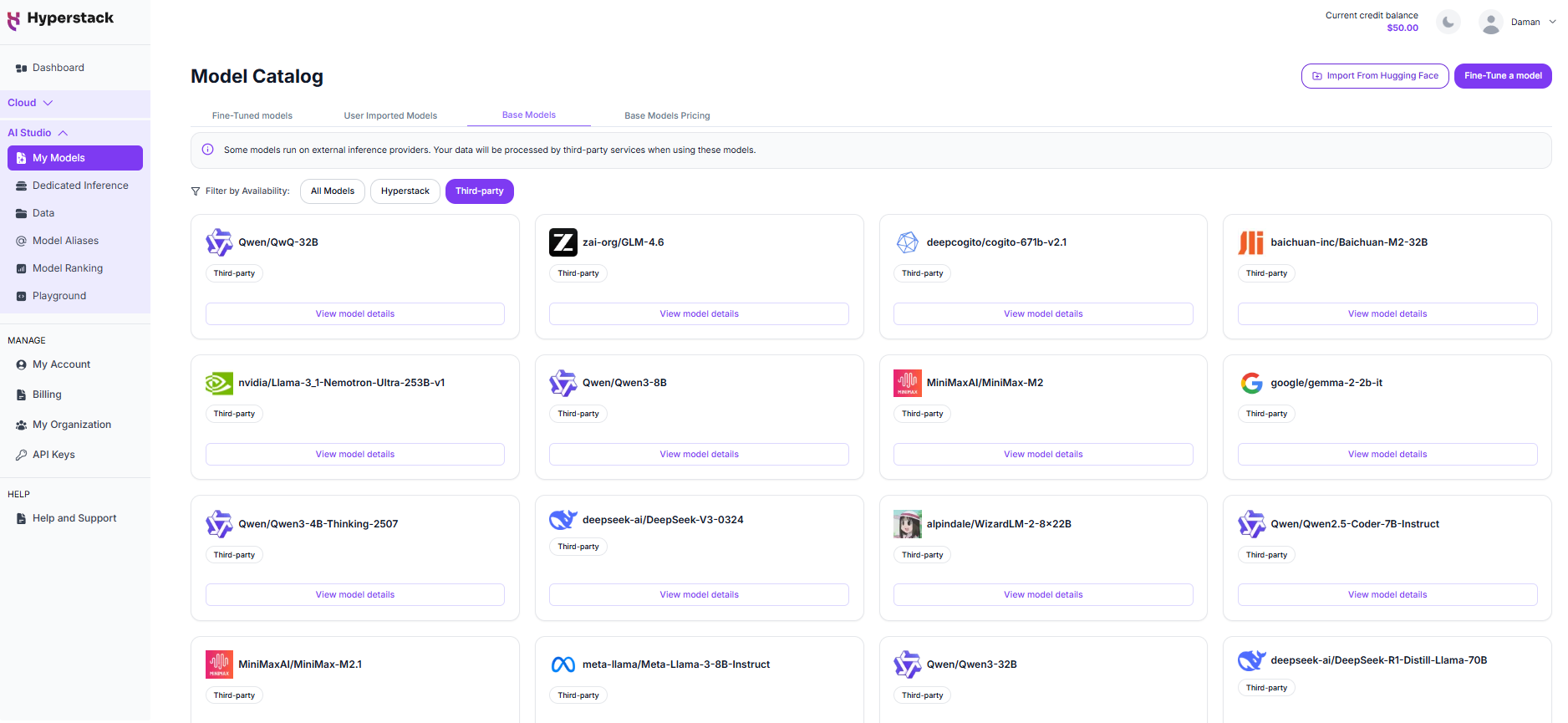
Third-Party Hosted Models
Selected third-party models are available for inference-only use and can be accessed straight from the Playground. So you can experiment, test and compare popular models without leaving the platform.
Check out the available third-party models here.
Persistent Playground Chat
The AI Studio Playground now supports persistent chat sessions, retaining conversation history, selected model, prompts and parameter settings across page refreshes and logins.
Try Models in the Playground →
Latest Fixes and Improvements
We’ve also rolled out several fixes and improvements to make your day-to-day experience better on Hyperstack:
- Kubernetes CSI Driver RBAC Policy: Added
policy:KubernetesCSIDriverto grant users the permissions required for proper CSI driver functionality. - Cluster and Node Naming Updates: New cluster names are now limited to 20 characters. Node VM names no longer include a
kube-prefix and use a shorter format based on the cluster name, node role, and count for improved clarity and consistency. - Image Size Display Update: The
display_sizefield in the List Images API now uses IEC units (e.g.,GiB), replacing the previous SI-based (GB) formatting for more accurate byte conversion.
New on our Blog
Check out the latest tutorials on Hyperstack:
5 Kubernetes Use Cases:
That Will Define Cloud-Native Workloads in 2026
Every few years, cloud-native hits a turning point. New workloads suddenly demand more scale, more automation and more resilience than our existing tools can handle and AI is pushing that shift hard. Teams aren’t asking “Should we adopt Kubernetes?” anymore but “How far can Kubernetes take us?” Whether you’re building AI pipelines, running multi-region microservices or scaling GPU-heavy training jobs, Kubernetes is a natural fit for modern cloud-native workloads.
Check out the full blog below!
PyTorch vs TensorFlow in 2026:
Which Framework to Choose?
Choosing the right deep learning framework can directly impact how fast you build, train and deploy AI models. Both frameworks support popular AI technologies like generative AI and enterprise-scale machine learning systems. While they often achieve similar results, the way you work with them and scale with them can feel very different. Our latest blog breaks down PyTorch vs TensorFlow, helping you decide which framework fits your goals, workflow and production needs in today’s fast-moving AI.
Check out the full blog below!

LLMs vs SLMs:
Your Guide to Choosing the Right Model for AI Workloads
If you’re unsure when your workload needs an LLM or an SLM, the answer depends on what you’re optimising for. LLMs offer better reasoning and generalisation, while SLMs deliver faster inference and lower operational costs. Most teams end up using both, just for different parts of their pipeline. In this blog, you’ll get a clear breakdown of LLMs vs SLMs and GPU recommendations for deployment.
Check out the full blog below!
Popular Open-Source Text-to-Speech Models in 2026:
All You Need to Know
You’re building something intelligent, something that thinks. But then you realise… it should speak too, not robotic but truly human-like. A product with a voice that connects, guides and responds across languages, platforms and users. With open-source TTS models, you can run, fine-tune and deploy your way. No lock-ins but you get flexibility, performance and innovation. Our latest blog walks you through the popular open-source text-to-speech models and how to choose the right one for your stack.
Check out the full blog below!
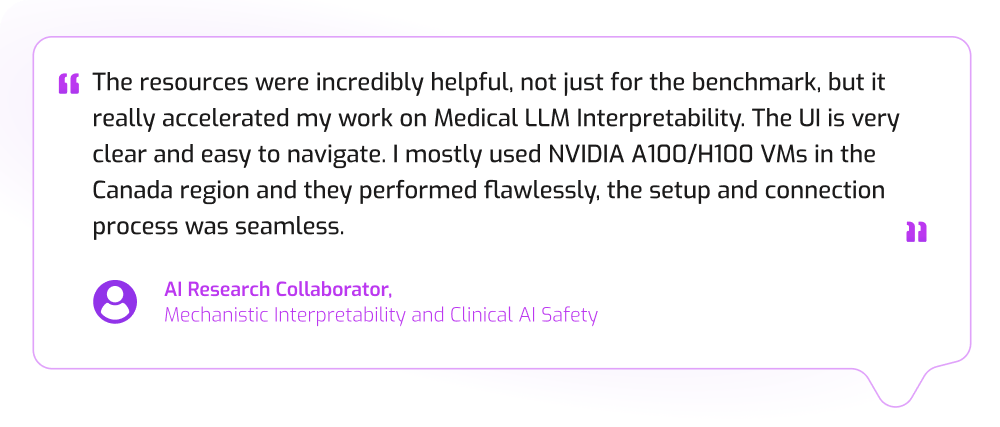
Hear What Our Users Say
We could say our users are happy but it’s better coming from them. Take a look below.
Your Ideas Power Hyperstack
You know your workflow better than anyone. If there’s anything you wish Hyperstack did differently or better, now’s your chance to tell us.
Maybe it’s a feature you’ve been thinking about, a tool that could speed up your workflow, or a simple improvement that would make your project easier. Whatever it is, we’re listening.
That's it for this week's Hyperstack Rundown! Stay tuned for more updates next week and subscribe to our newsletter below for exclusive AI and GPU insights delivered to your inbox!
Missed the Previous Editions?
Catch up on everything you need to know from Hyperstack Weekly below:
Subscribe to Hyperstack!
Enter your email to get updates to your inbox every week